
Ancient fire pits were sometimes constructed in the floor, in caves, or at the middle of a hut or home. Evidence of ancient, man-made flames is present on all five inhabited continents. The drawback of premature indoor flame pits was that they generated toxic and/or irritating smoke within the dwelling.Fire pits developed into raised hearths in buildings, but ventilation smoke relied on open windows or holes in roofs. The great hall typically had a centrally located hearth, where an open flame burned with the smoke rising to the port in the roof. Louvers were developed throughout the Middle Ages to allow the roof vents to be covered so snow and rain wouldn't enter.
Additionally throughout the Middle Ages, smoke canopies were devised to stop smoke from spreading through an area and vent it outside via a ceiling or wall. These can be placed against stone walls, rather than taking up the middle of the space, and this allowed smaller chambers to be heated.Chimneys were invented in northern Europe in the 11th or 12th centuries and mostly fixed the problem of fumes, more faithfully venting smoke outside. They made it possible to give the fireplace a draft, and also made it possible to place fireplaces in numerous rooms in buildings conveniently. They did not come into general usage immediately, however, as they were more expensive to build and maintain.In 1678 Prince Rupert, nephew of Charles I, increased the grate of the fireplace, improving the venting and airflow system. Benjamin Franklin developed a convection chamber for the fireplace which greatly improved the efficacy of fireplaces and wood stoves. He also improved the airflow by pulling air from a basement and venting a longer place on very top. In the later 18th century, Count Rumford designed a fireplace with a tall, shallow firebox which was better at drawing the smoke up and out of the construction. The shallow design improved greatly the quantity of radiant warmth projected into the room. Rumford's layout is the foundation for modern fireplaces.
Instead it depended on simple designs with small unnecessary ornamentation. In the 1890s the Aesthetic movement gave way into the Arts and Crafts movement, in which the emphasis was placed on providing quality gems. Stone fireplaces now have been a symbol of wealth, which to some degree is still the idea today.A fireplace is a construction made from brick, stone or metal designed to include a fire. Fireplaces are used for its relaxing ambiance they create and for heating a room. Modern fireplaces vary in heat efficiency, based upon the plan.Historically they have been utilized for heating a home, cooking, and heating water for domestic and laundry uses. A fire is contained in a firebox or firepit; a chimney or alternative flue allows exhaust to escape.
Related Images with Dimplex Electric Fireplaces » Fireboxes Inserts » Products » 25quot; MultiFire XD Electric Firebox
Dimplex Belvedere 51Inch Electric Fireplace With Purifire Burnished Walnut GDS30BW1053

On the exterior there is frequently a corbeled brick crown, where the casting courses of brick function as a drip route to keep rainwater from running down the exterior walls. A hood, cap, or shroud serves to keep rainwater out of the outside of the chimney; rain in the chimney is a much greater problem in chimneys lined with impervious flue tiles or metal liners than with the standard masonry chimney, which divides up all but the most violent rain. A few chimneys have a spark arrestor incorporated into the crown or cap.
Organizations such as the United States Environmental Protection Agency and the Washington Department of Ecology warn that, according to different studies, fireplaces could pose a substantial health risk. The EPA writes"Smoke may smell great, but it is not good for you.Kinds of fireplacesManufactured fireplaces are made out of sheet glass or metal flame boxes.Electric fireplaces can be built-in replacements for gas or wood or retrofit with log inserts or electrical fireboxes.
In the United States, several states and local counties have laws restricting these types of fireplaces. There are also air quality control problems due to the amount of moisture that they discharge into the room air, and oxygen detector and carbon dioxide sensors are security essentials. Direct vent fireplaces are fueled by liquid propane or natural gas. They are totally sealed in the area that is heated, and vent all exhaust gasses to the outside of the structure.
Dimplex DFG3033 33 inch SelfTrimming Electric Fireplace Insert eBay

As time passes, the purpose of fireplaces has transformed from one of requirement to one of visual interest. Early ones were more fire pits compared to modern fireplaces. They have been used for warmth on chilly days and nights, in addition to for cooking. They also served as a gathering place inside the house. These fire pits were usually based within a room, allowing more people to collect around it.
Dimplex Electric Fireplaces » Mantels » Products » Linwood Electric Fireplace

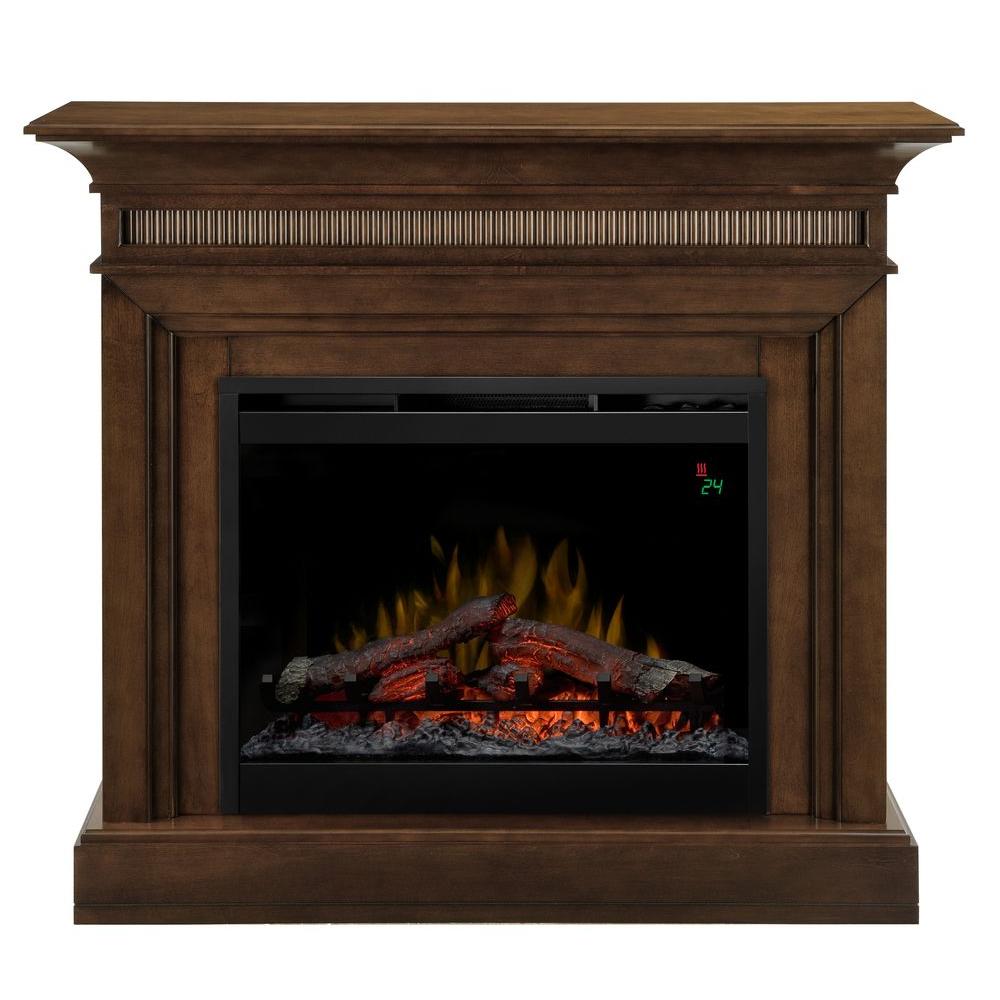
Dimplex Harleigh 44 in. Electric Fireplace in WalnutDFP26L1475WN The Home Depot
Many flaws were found in ancient fireplace designs. The most renowned fireplace designers of the period were the Adam Brothers. They perfected a kind of fireplace design that was used for generations. It had been smaller, more brightly colored, with a emphasis on the quality of the substances used in their construction, as opposed to their size.
By the 1800s most new fireplaces were composed of two parts, the surround as well as the insert. The encircle comprised of the mantlepiece and sides supports, typically in wood, marble or granite. The insert was where the fire burned, and was built of cast iron often backed with ornamental tiles. In addition to providing warmth, the fireplaces of the Victorian era were believed to add a cozy ambiance to houses.Dimplex Harleigh 44 in. Electric Fireplace in WalnutDFP26L1475WN The Home Depot Video
Some fireplace components include a blower that transports more of the fireplace's heat to the atmosphere via convection, leading to a more evenly heated space and a decrease heating load. Fireplace efficiency can also be increased with the use of a fireback, a piece of metal that sits behind the fire and reflects heat back into the room. Firebacks are traditionally made from cast iron, but can also be made from stainless steel. Efficiency is a complex notion although with open hearth fireplaces. Most efficiency tests consider only the effect of heating of the atmosphere. An open fireplace is not, and never was, intended to heat the air. The ideal way to estimate the output signal of a fireplace is if you notice you're turning the thermostat down or up.
Most older fireplaces have a relatively low efficiency rating. Standard, contemporary, weatherproof masonry fireplaces though have an efficiency rating of 80% (legal minimum necessity for example in Salzburg/Austria). To boost efficiency, fireplaces may also be modified by adding special heavy fireboxes developed to burn much cleaner and can reach efficiencies as large as 80 percent in heating the atmosphere. These altered fireplaces are usually equipped with a large fire window, enabling an efficient heating system in two phases. During the first phase the initial heat is offered through a large glass while the fire is burning. During this time period the construction, constructed of refractory bricks, absorbs the heat. This heat is then evenly radiated for many hours during the next phase. Masonry fireplaces with no glass fire window only provide heat radiated from its surface. Depending on temperatures 1 to 2 daily firings are enough to guarantee a constant room temperature.dimplex electric fireplace
No comments:
Post a Comment